Jumat, 16 November 2012

ROBERTA FLACK : HISTORY AND MUSIC DOWNLOAD

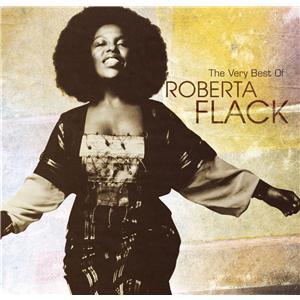
Roberta Flack (born February 10, 1939) is an American singer, songwriter, and musician who is notable for jazz, soul, R&B, and folk music. Roberta Flack is best known for her Hot 100 #1 singles "The First Time Ever I Saw Your Face", "Killing Me Softly with His Song" and "Feel Like Makin' Love", as well as "Where Is the Love" and "The Closer I Get to You", two of her many duets with Donny Hathaway. "The First Time Ever I Saw Your Face" won the 1973 Grammy Record of the Year and "Killing Me Softly with His Song" won the same award at the Grammy Awards of 1974. She and U2 are the only artists to win the award in consecutive years. 

Early Career 

Roberta Flack taught school for years in Washington, DC at Browne Junior High and Rabaut Junior High. She also taught private piano lessons out of her home on Euclid St. NW. During this period, her music career began to take shape on evenings and weekends in Washington, D.C. area night spots. At the Tivoli Club, she accompanied opera singers at the piano. 

During intermissions, she would sing blues, folk, and pop standards in a back room, accompanying herself on the piano. Later, she performed several nights a week at the 1520 Club, again providing her own piano accompaniment. Around this time, her voice teacher, Frederick "Wilkie" Wilkerson, told her that he saw a brighter future for her in pop music than in the classics. She modified her repertoire accordingly and her reputation spread. Subsequently, a Capitol Hill night club called Mr. Henry's built a performance area especially for her. 

1970s 

Les McCann discovered Flack singing and playing jazz in a Washington nightclub. He later said on the liner notes of what would be her first album "First Take" noted below, "Her voice touched, tapped, trapped, and kicked every emotion I've ever known. I laughed, cried, and screamed for more...she alone had the voice." Very quickly, he arranged an audition for her with Atlantic Records, during which she played 42 songs in 3 hours for producer Joel Dorn. In November 1968, she recorded 39 song demos in less than 10 hours. Three months later, Atlantic reportedly recorded Roberta's debut album, First Take, in a mere 10 hours. Flack later spoke of those studio sessions as a "very naive and beautiful approach...I was comfortable with the music because I had worked on all these songs for all the years I had worked at Mr. Henry's." 

Roberta Flack's version of "Will You Love Me Tomorrow" hit number seventy-six on the Billboard Hot 100 in 1972. 

Her Atlantic recordings did not sell particularly well, until Clint Eastwood chose a song from First Take, "The First Time Ever I Saw Your Face", for the sound track of his directorial debut Play Misty for Me; it became the biggest hit of the year for 1972 - spending six consecutive weeks at #1 and earning Flack a million-selling gold disc. The First Take album also went to #1 and eventually sold 1.9 million copies in the United States. Eastwood, who paid $2,000 for the use of the song in the film, has remained an admirer and friend of Flack's ever since. It was awarded the Grammy Award for Record Of The Year in 1973. In 1983, she recorded the end music to the Dirty Harry film Sudden Impact at Eastwood's request. 

Roberta Flack soon began recording regularly with Donny Hathaway, scoring hits such as the Grammy-winning "Where Is the Love" (1972) and later "The Closer I Get to You" (1978) - both million-selling gold singles. On her own, Flack scored her second #1 hit in 1973, "Killing Me Softly with His Song" written by Charles Fox and Norman Gimbel, and originally performed by Lori Lieberman. It was awarded both Record Of The Year and Best Pop Vocal Performance, Female at the 1974 Grammy Awards. Its parent album was Flack's biggest-selling disc, eventually earning Double Platinum certification. Flack and Hathaway recorded several duets together, including two LPs, until Hathaway's 1979 death. 
1980s 

Roberta Flack had a 1982 hit single with "Making Love", written by Burt Bacharach (the title track of the 1982 film of the same name), which reached #13. She began working with Peabo Bryson with more limited success, charting as high as #5 on the R&B chart (plus #16 Pop and #4 Adult Contemporary) with "Tonight, I Celebrate My Love" in 1983. Her next two singles with Bryson, "You're Looking Like Love To Me" and "I Just Came Here To Dance," fared better on adult contemporary (AC) radio than on pop or R&B radio. 

In 1986, Flack sang the theme song entitled "Together Through the Years" for the NBC television series, Valerie later known as The Hogan Family. The song was used throughout the show's six seasons. Oasis was released in 1988 and failed to make an impact with pop audiences, though the title track reached #1 on the R&B chart and a remix of "Uh-Uh Ooh-Ooh Look Out (Here It Comes)" topped the dance chart in 1989. Flack found herself again in the US Top 10 with the hit song "Set the Night to Music", a 1991 duet with Jamaican vocalist Maxi Priest that peaked at #6 on the Billboard Hot 100 charts and #2 AC. Flack's smooth R&B sound lent itself easily to Easy Listening airplay during the 1970s, and she has had four #1 AC hits. 

Later Career 

In 1999, a star with Flack's name was placed on Hollywood's Walk of Fame. That same year, she gave a concert tour in South Africa, to which the final performance was attended by President Nelson Mandela. In 2010, she appeared on the 52nd Annual Grammy Awards, singing a duet of "Where Is The Love" with Maxwell. 

In February 2012, Flack released Let it Be Roberta, an album of Beatles covers including "Hey Jude" and "Let it Be". It is her first recording in over eight years. Flack knew John Lennon and Yoko Ono, as both households moved in 1975 into the The Dakota apartment building in New York City, and had apartments across the hall from each other. Flack has stated that she has already been asked to do a second album of Beatles covers. 

Roberta Flack's Songs :

1. Killing Me Softly With His Song                                                  DOWNLOAD

STEVIE WONDER : HISTORY AND MUSIC DOWNLOAD


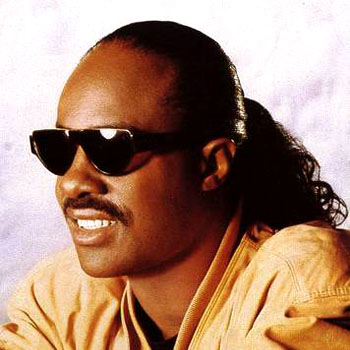
Stevland Hardaway Morris (born May 13, 1950 as Stevland Hardaway Judkins), known by his stage name Stevie Wonder, is an American singer, songwriter, and multi-instrumentalist, a child prodigy who developed into one of the most creative musical figures of the late 20th century. Blind since shortly after birth,Wonder signed with Motown's Tamla label at the age of eleven, and continues to perform and record for Motown to this day. 

Among Wonder's best known works are singles such as "Superstition", "Sir Duke", "I Wish" and "I Just Called to Say I Love You". Well known albums also include Talking Book, Innervisions and Songs in the Key of Life. He has recorded more than thirty U.S. top ten hits and received twenty-two Grammy Awards, the most ever awarded to a male solo artist. Wonder is also noted for his work as an activist for political causes, including his 1980 campaign to make Martin Luther King, Jr.'s birthday a holiday in the United States. In 2009, Wonder was named a United Nations Messenger of Peace. In 2008, Billboard magazine released a list of the Hot 100 All-Time Top Artists to celebrate the US singles chart's fiftieth anniversary, with Wonder at number five. 

Blind from birth, Stevie Wonder (1950-) first became famous as "Little" Stevie Wonder as a supporting act on the Motown Records roster. He could play keyboards and various percussion instruments, but it was his harmonica talents that most impressed Berry Gordy, and featured in Wonder's first hit, "Fingertips Part 2" (1963), a live recording of a mostly improptu performance. (Listen closely, and you'll hear the bassist for Martha Reeves and the Vandellas stammering, "What key? What key?" after he got on stage thinking Stevie was done performing.) 

Even at his young age, Wonder attempted to be progressive with his singing and song choices, notably his recording the Bob Dylan song "Blowin' In the Wind" which some at Motown thought was a mistake. While several of his 1960s hits, particularly "Uptight (Everything's Alright)" and his cover of "For Once In My Life", have proved durable, it's his material starting with 1972's Talking Book up through 1976's Songs in the Key of Life that are probably his most popular and critically well regarded. These songs even broke the alleged Album Rock "color barrier", thanks in no small part to his performing the Talking Book material on a tour with The Rolling Stones at that time. 

Today, Wonder is still revered by many, though his days as a major radio force are essentially over. He's also known for his political activism, up to his very vocal endorsing and supporting of Barack Obama. 

Stevie Wonder's Songs :

1.  You Are The Sunshine of My Life                                            DOWNLOAD

SUE THOMPSON : HISTORY AND MUSIC DOWNLOAD


Sue Thompson (born Eva Sue McKee July 19, 1925, Nevada, Missouri) is an American pop and country music singer. She is best known for the million selling hits "Sad Movies (Make Me Cry)" and "Norman", both pop hits for her in the 1960s.

 At the age of seven, she was already singing and playing the guitar on stage.[1] When she and her family moved out west to San Jose, she appeared on the Hometown Hayride TV program. During World War II, she worked at a defense plant. She married when she was 17, and had a daughter at 20, but the marriage failed and she and her husband split up after three years. To keep supporting herself after her divorce, she returned to the nightclub scene in California. In San Jose, she won a talent contest, thus catching the attention of bandleader and radio/TV host Dude Martin. Martin invited Thompson to sing with his band, and this eventually led to their marriage. They recorded some duets together, including "If You Want Some Lovin'", which helped her get her own solo contract from Mercury Records in 1950. 

Within only a year, she had divorced Martin to marry Hank Penny, a comedian and singer. Penny and Thompson hosted a TV show in Los Angeles together before eventually moving to Las Vegas. Thompson recorded separately and also with her husband for Decca Records. However, none of their songs ever gained any real success. In 1960, Thompson signed on with Hickory Records. In 1961, "Sad Movies (Make Me Cry)" became a No. 5 hit on the pop charts, and she followed this up successfully with "Norman," which reached No. 3. Both of these hit singles were written by songwriter John D. Loudermilk. They both sold over one million copies, and were awarded with gold discs. 

In 1962, "Have a Good Time" was a Top 40 hit and in 1963, "Willie Can" was a minor hit. Her early 1960s' hits made Thompson, then in her mid-thirties, a favorite among the teenage crowd and briefly a rival to the much younger Connie Francis and Brenda Lee. Two additional hits, also written by Loudermilk, were "James (Hold the Ladder Steady)" and "Paper Tiger." 

The sleeve notes accompanying this album, released in 1965 by Hickory Records, written by Joe Lucas, give a little more detail of Thompson's early life and recording career as follows: 'Looking at lovely Sue Thompson today, it's hard to visualise her as a child—a freckle-faced tomboy, more at home on a horse than playing with dolls and doing the little things small girls are credited with doing. Yet this is the picture of Sue Thompson during her childhood in Nevada, Missouri. Sue, an only child, startled her family when she showed a flair for singing and show business. No one in her family was remotely connected with this type of business in any way. Sue was given a guitar for her seventh birthday, and with the aid of a cousin, soon began to learn a few chords. This was it! From that time on Sue and the guitar became one. She entertained every chance she had at school, church and social functions. Sue's mother became ill, so the family moved to Sheridan, California, where Sue entered high school and once again began to entertain at every opportunity. She went to San Jose, California for her last two years of school and it was here that her first real break came. She entered a contest at San Jose theater, won, and was awarded a two-week engagement on the stage and a movie part. 

Joe Lucas's notes continued 'After school Sue worked at other jobs, but kept busy with radio, TV and personal appearances. She decided to devote her full time to entertainment and has played successfully at the Golden Nugget and Show Boat Hotels in Las Vegas, Nevada and the Riverside and Golden Nugget Hotels in Reno, Nevada and many, many others. Statistics wise, Thompson stands five feet one inch, weighs 106 pounds and has red-blonde hair. Early in 1961, she signed an exclusive recording contract with Hickory Records, Inc. in Nashville, Tennessee. Her first release "Angel, Angel" did well, but it was her second release "Sad Movies (Make Me Cry)" that spiraled into the top five bestsellers in America and established her as a top ranked recording artiste. Her third record came out called "Norman" surpassed "Sad Movies." 

"Paper Tiger" in 1965 was her last Top 30 hit. In the late 1960s, she went back to country music and released the album This Is Sue Thompson Country in 1969. In 1971 she worked with country music singer Don Gibson on some albums, and they had minor hits with "I Think They Call It Love," "Good Old Fashioned Country Love," and "Oh, How Love Changes." She recorded further solo singles for the country charts, like "Big Mable Murphy," which made the Top 50 in 1975 and "Never Naughty Rosie," her last chart single in 1976. She also performed mainly at the Las Vegas casinos and at clubs in Hollywood, like the Palomino Club. In the 1990s, she settled in Las Vegas, and continues to periodically perform. 

Sue Thompson's Songs :

1. Sad Movies                                                       DOWNLOAD

THE EVERLY BROTHERS : History And Music DOWNLOAD


Isaac Donald "Don" Everly (born February 1, 1937) and Phillip "Phil" Everly (born January 19, 1939), together known as the Everly Brothers, are country-influenced rock and roll performers, known for steel-string guitar playing and close harmony singing. The duo was elected to the Rock and Roll Hall of Fame in 1986. 

Don and Phil Everly are both guitarists and use vocal harmony mostly based on parallel thirds. With this, each line can often stand on its own as a melody line. This is in contrast to classic harmony lines which, while working well alongside the melody, are not as melodic by themselves. 

For most of their recordings, Don sings the baritone part and Phil the tenor part. One exception is on "Devoted To You." Although Don is still low and Phil is high, they switch lead and harmony back and forth. Don almost always sings any lines that are sung solo (for example, the verses of "Bye Bye Love"). Among the exceptions to this rule is the Everlys' 1965 single "It's All Over," where Phil sings the song's solo lines. 

In the late 1950s, the Everly Brothers were the rock 'n' roll youth movement's addition to close harmony vocal groups of which many were family bands. Among the Everly's famous counterparts in country music were The Delmore Brothers, The Louvin Brothers, Jim & Jesse (McReynolds) and The Osborne Brothers. 

The duo's harmony singing had a strong influence on rock groups of the 1960s. The Beatles, The Beach Boys and Simon & Garfunkel developed their early singing styles by performing Everly covers. 

Don was born in Brownie, Muhlenberg County, Kentucky, and Phil two years later in Chicago, Illinois. Their father, Ike Everly, was a musician. Ike, with Merle Travis, Mose Rager, and Kennedy Jones, was honored by the construction of The Four Legends Fountain in Drakesboro, Kentucky. Ike Everly had a show on KMA and KFNF in Shenandoah, Iowa, in the 1940s, with his wife Margaret and two young sons. Singing on the show gave the brothers their first exposure to the music industry. The family sang together and lived and traveled in the area singing as the Everly Family. The Everly Brothers grew up from ages 5 and 7 through early high school in Shenandoah. (Their boyhood home is being restored and will be donated to the Shenandoah Historical Society in the spring of 2009). They are the cousins of actor James Best. The Everly family moved to Knoxville, Tennessee and the brothers attended Knox West High School, continuing their musical development and first catching the attention of Chet Atkins. 

As the brothers transitioned out of the family act and into a duo, family friend Chet Atkins became an early champion of The Everly Brothers. Despite his affiliation with RCA Records, it was Atkins who engineered a chance for The Everly Brothers to record for Columbia Records in early 1956. However, their first and only single for the label, "Keep A' Lovin' Me," was a flop, and they were quickly dropped from Columbia. 

Atkins still encouraged the Everly Brothers to continue, and introduced them to Wesley Rose of Acuff-Rose music publishers. Impressed with the duo's songwriting talents, Rose told them that if they signed to Acuff-Rose as songwriters, he would also get them a recording deal. The duo signed to Acuff-Rose in late 1956, and by early 1957 Rose had introduced them to Archie Bleyer, who was looking for artists for his Cadence Records label. The Everlys signed to Cadence, and entered the recording studio for their first Cadence session in February 1957. 

Their first Cadence single, "Bye Bye Love," had been rejected by 30 other acts (including Elvis Presley)[citation needed], but the Everlys saw potential in the song. Their recording of "Bye Bye Love" reached No. 2 on the pop charts behind Presley's "Let Me Be Your Teddy Bear", hitting No. 1 on the Country and No. 5 on the R&B charts. The song, written by the husband and wife Felice and Boudleaux Bryant, became the Everly Brothers' first million-seller. 

They became stalwarts of the Cadence label. Working with the Bryants, the duo had hits in the United States and the United Kingdom, the biggest being "Wake Up Little Susie," "All I Have to Do Is Dream," "Bird Dog" and "Problems," all penned by the Bryants. The Everlys also found success as songwriters, especially with Don's "(Till) I Kissed You," which hit No. 4 on the US pop charts. 

The brothers toured extensively with Buddy Holly during 1957 and 1958. According to Holly biographer Philip Norman, they were responsible for the change in style for Holly and The Crickets from Levi's and T-shirts to the Everlys' sharp Ivy League suits. Don claimed Holly to be a generous songwriter who wrote the song "Wishing" for them, while Phil later stated: "We were all from the South. We'd started in country music." 

Phil Everly was one of Buddy Holly's pallbearers at his funeral in February 1959, although Don did not attend. He later said, "I couldn't go to the funeral. I couldn't go anywhere. I just took to my bed." 

The Everly Brothers's Songs :

1. Let It Be Me                                          DOWNLOAD
2. All I Have To Do Is Dream                   DOWNLOAD

TOM JONES : HISTORY AND MUSIC DOWNLOAD


Sir Thomas John Woodward, OBE (born 7 June 1940), known by his stage name Tom Jones, is a Welsh singer. He became one of the most popular vocalists to emerge from the British Invasion. Since the mid-1960s, Jones has sung nearly every form of popular music – pop, rock, R&B, show tunes, country, dance, soul and gospel – and sold over 100 million records. 

Jones has had thirty-six Top 40 hits in the United Kingdom and nineteen in the United States; some of his notable songs include "It's Not Unusual", "What's New Pussycat", "Delilah", "Green, Green Grass of Home", "She's a Lady", "Kiss" and "Sex Bomb". 

Having been awarded an OBE in 1999, Jones received a knighthood from Queen Elizabeth II for "services to music" in 2006. Jones has received numerous other awards throughout his career, including the Grammy Award for Best New Artist in 1966, an MTV Video Music Award in 1989 and two Brit Awards – winning Best British Male, in 2000, and Outstanding Contribution to Music, in 2003. 

Jones, whose voice has been described as a "full-throated, robust baritone", became the frontman for Tommy Scott and the Senators, a Welsh beat group, in 1963. They soon gained a local following and reputation in South Wales. In 1964 the group recorded several solo tracks with producer Joe Meek, who took them to various labels, but they had little success. Later that year Decca producer Peter Sullivan saw Tommy Scott and The Senators performing in a club and directed them to manager Phil Solomon, but the partnership was short-lived. 

The group continued to play gigs at dance halls and working men's clubs in South Wales. One night, at the Top Hat in Cwmtillery, Wales, Jones was spotted by Gordon Mills, a London-based manager originally from South Wales. Mills became Jones' manager and took the young singer to London, and also renamed him Tom Jones, to exploit the popularity of the Academy Award winning 1963 film.

Eventually Mills got Jones a recording contract with Decca. His first single, "Chills and Fever", was released in late 1964. It did not chart, but the follow-up, "It's Not Unusual" became an international hit after offshore pirate radio station Radio Caroline promoted it. The following year would be the most prominent of Jones's career, making him one of the most popular vocalists of the British Invasion. In early 1965 "It's Not Unusual" reached number one in the United Kingdom and the top ten in the United States. During 1965 Mills secured a number of movie themes for Jones to record including the themes for the film What's New Pussycat? (written by Burt Bacharach and Hal David) and for the James Bond film Thunderball. Jones was also awarded the Grammy Award for Best New Artist for 1966. In Hollywood, Jones met Elvis Presley for the first time who he recalls singing his song as he walked towards him on set. 
 
In 1966 Jones' popularity began to slip somewhat, causing Mills to redesign the singer's image into that of a crooner. Jones also began to sing material that appealed to a wider audience such as the big country hit "Green, Green Grass of Home". The strategy worked and Jones returned to the top of the charts in the United Kingdom and began hitting the Top 40 again in the United States. For the remainder of the decade he scored a string of hits on both sides of the Atlantic. 

Tom Jones's Songs :

1. Let It Be Me                               DOWNLOAD

THE BEE GEES : History And Music DOWNLOAD

The Bee Gees were a musical group founded in 1958. The group's line-up consisted of brothers Barry, Robin, and Maurice Gibb. The trio were successful for most of their decades of recording music, but they had two distinct periods of exceptional success: as a pop act in the late 1960s/early 1970s, and as prominent performers of the disco music era in the late 1970s. 

The group sang three-part tight harmonies that were instantly recognisable; Robin's clear vibrato lead was a hallmark of their earlier hits, while Barry's R&B falsetto became their signature sound during the late 1970s and 1980s. The brothers wrote all of their own hits, as well as writing and producing several major hits for other artists. 

Born in the Isle of Man to English parents, the Gibb brothers lived their first few years in Chorlton, Manchester, England, then moved in the late 1950s to Redcliffe, Queensland, Australia, where they began their music careers. After achieving their first chart success in Australia with "Spicks and Specks" (their 12th single), they returned to the United Kingdom in January 1967 where producer Robert Stigwood began promoting them to a worldwide audience. 

The Bee Gees' career record sales total more than 220 million ranking them among the best-selling music artists of all time. They were inducted into the Rock and Roll Hall of Fame in 1997; the presenter of the award to "Britain's first family of harmony" was Brian Wilson, historical leader of the Beach Boys, a "family act" also featuring three harmonising brothers. The Bee Gees' Hall of Fame citation says "Only Elvis Presley, The Beatles, Michael Jackson, Garth Brooks and Paul McCartney have outsold the Bee Gees." 

Following Maurice's unexpected death in January 2003, Barry and Robin retired the group's name after 45 years of activity. In 2009 Robin announced that he and Barry had agreed that the Bee Gees would re-form and perform again. Robin died in May 2012 after a prolonged struggle with cancer. 

Bee Gees' 1st is the third studio album by the English rock band Bee Gees, released in July 1967. Despite the album's title, it was not their first full-length recording; it was, however, their first album to be released internationally, as their first two LPs were only available in Australia and New Zealand. Bee Gees' 1st was the group's debut album for the UK Polydor label, and for the US Atco label. 

Reflecting the group's early style, Bee Gees' 1st was a psychedelic rock album. The album cover was designed by Klaus Voormann who had previously done the cover for Revolver by the Beatles. (and also a member of Plastic Ono Band, and also played bass on John Lennon's 1971 song "Imagine") Bee Gees 1st peaked at #7 on Billboard's Pop Albums chart and at #8 on the UK Albums Chart. In 2006, Reprise Records (sister label to Atco under Warner Music Group) reissued Bee Gees 1st with both stereo and mono mixes on one disc and a bonus disc of unreleased songs and alternate takes. 

The Bee Gees's Songs :

1. How Deep Is Your Love                       DOWNLOAD
2. Smile For Me                                        DOWNLOAD
3. To Love Somebody                               DOWNLOAD

THE CARS : DRIVE DOWNLOAD


The Cars are an American rock band that emerged from the New Wave music scene in the late 1970s. The band originated in Boston, Massachusetts, with lead singer and rhythm guitarist Ric Ocasek, lead singer and bassist Benjamin Orr, guitarist Elliot Easton, keyboardist Greg Hawkes and drummer David Robinson. They were signed to Elektra Records by George Daly, then A&R head, in 1977. 

The Cars 

• Ric Ocasek – rhythm guitar, lead vocals 
• Elliot Easton – lead guitar, backing vocals 
• Greg Hawkes – keyboards, percussion, saxophone, backing vocals 
• Benjamin Orr – bass guitar, lead vocals 
• David Robinson – drums, percussion, electronic percussion, backing vocals 

The Cars were at the forefront in merging 1970s guitar-oriented rock with the new synth-oriented pop that was then becoming popular and which would flower in the early 1980s. The Cars started fresh with their debut album The Cars which went on to go platinum in late 1978. The Cars' debut album was called a "genuine rock masterpiece" by Allmusic. The most successful and well known song from the album, "Just What I Needed", started as a demo in 1977. The song was sent as a mix tape to a local DJ in the Boston area, who played the song in heavy rotation. This soon caught the attention of other DJs, which led to the signing of the band by Elektra Records in 1977. The Cars have mentioned this numerous times including in their "last" interview in June 2000. 

The band broke up in 1988, and Ocasek had always discouraged talk of a reunion since then, telling one interviewer in 1997 "I'm saying never and you can count on that." Bassist Benjamin Orr died in 2000 from pancreatic cancer. In 2005, Easton and Hawkes joined with Todd Rundgren to form a spin-off band, The New Cars, which performed classic Cars and Rundgren songs alongside new material. The surviving original members reunited in 2010 to record a new album, titled Move Like This, which was released May 10, 2011, and a tour to start on the same day. 

The Cars is the eponymous debut studio album by American rock band The Cars. It was released on June 6, 1978 on Elektra Records. With the popular tracks "Just What I Needed" and "My Best Friend's Girl" getting heavy airplay on AOR radio stations, the album sold one million copies by the end of the year and steadily climbed the charts, peaking at number 18 on the Billboard 200 chart in March 1979. The album was ranked number 4 on Billboard's "Top Albums of the Year" chart for 1979. The Cars remained on the album chart for 139 weeks with four more tracks: "Good Times Roll", "You're All I've Got Tonight", "Bye Bye Love", and "Moving in Stereo", which all became radio favorites. 

The album was critically well received. Allmusic reviewer Greg Prato described the album as "a genuine rock masterpiece", and that "all nine tracks are new wave/rock classics" in their retrospective review. Rolling Stone magazine ranked the album No. 279 in its "500 Greatest Albums of All Time" list. 

The Cars's Songs:

1. Drive                                                               DOWNLOAD